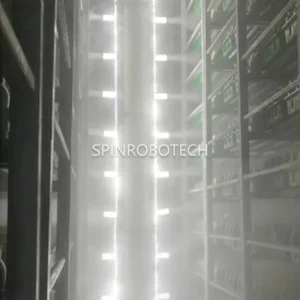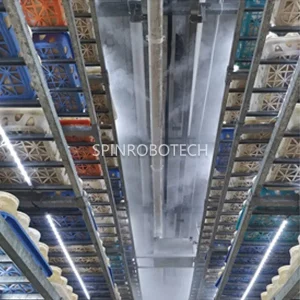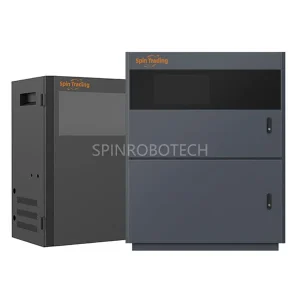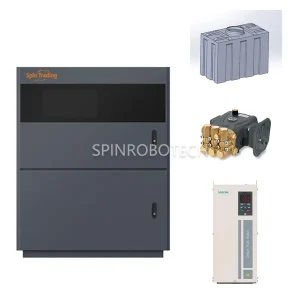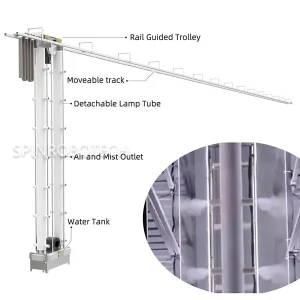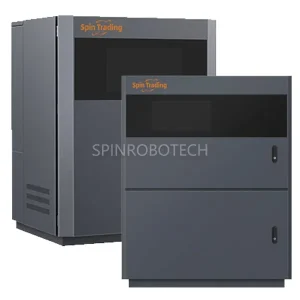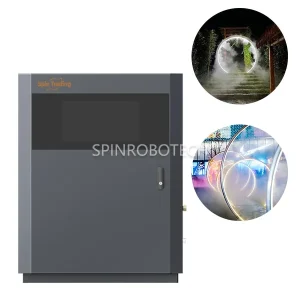


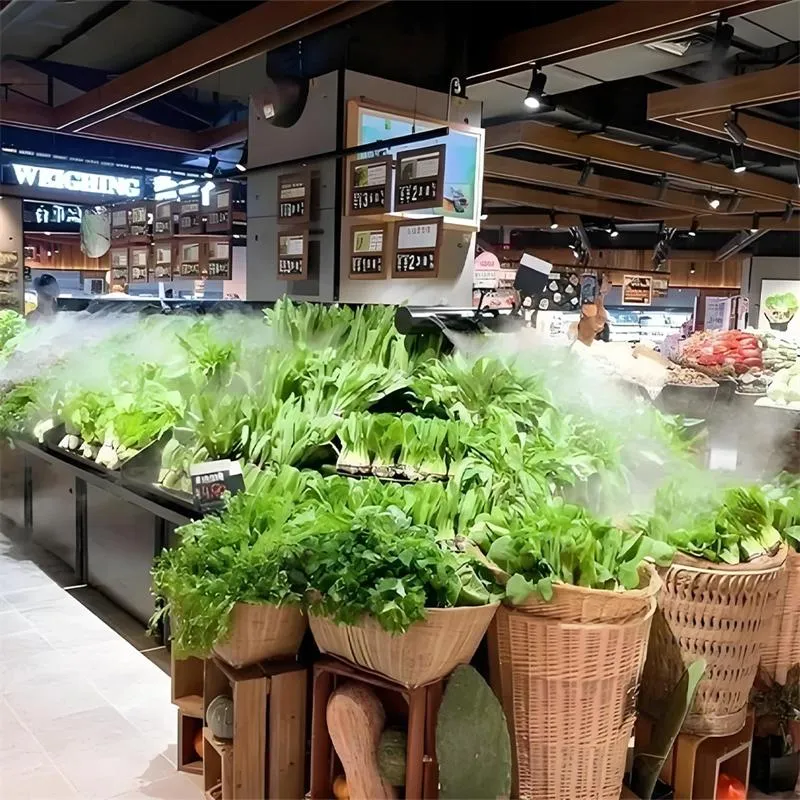
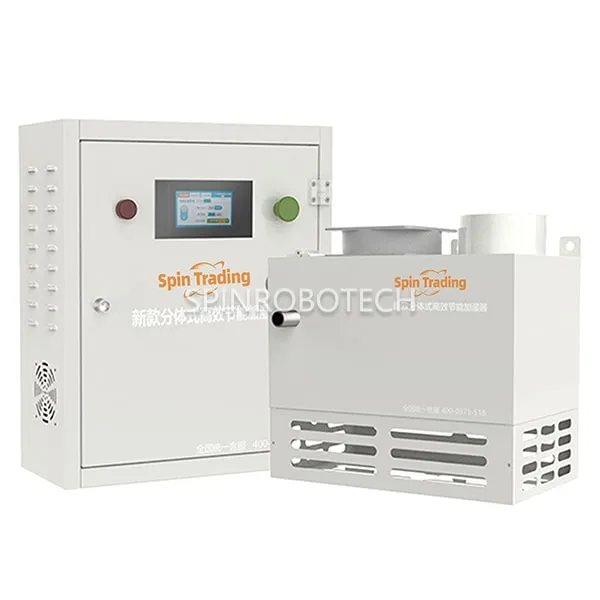
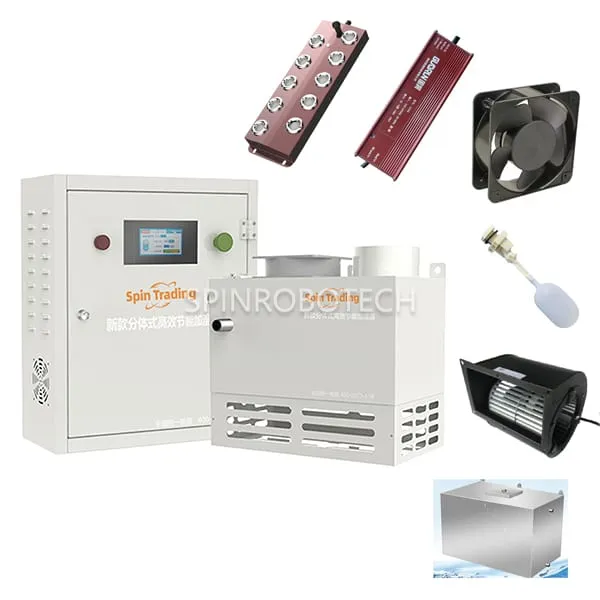


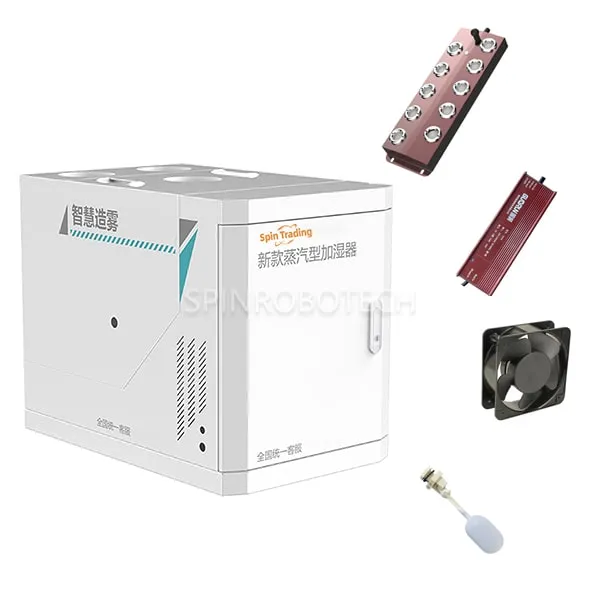
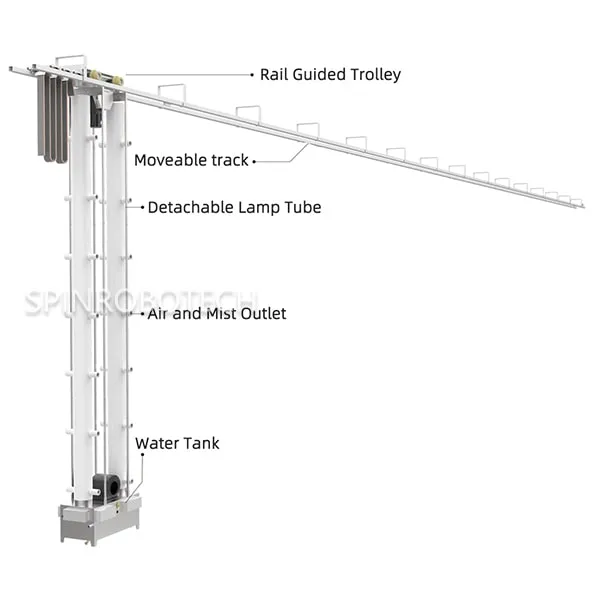
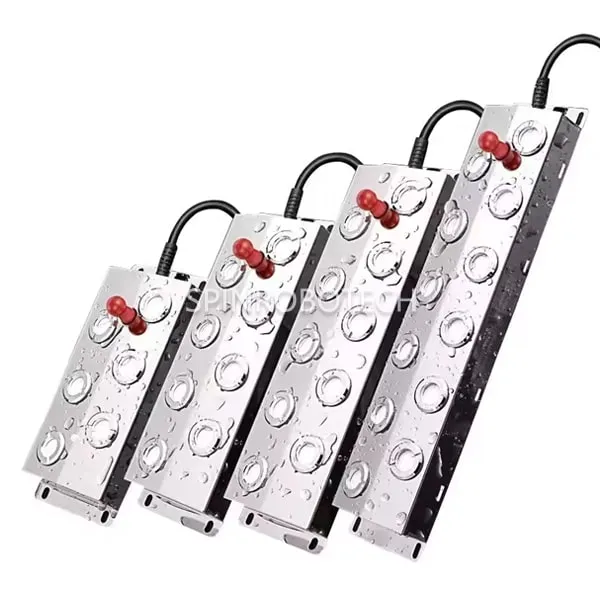


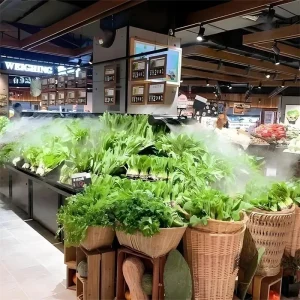

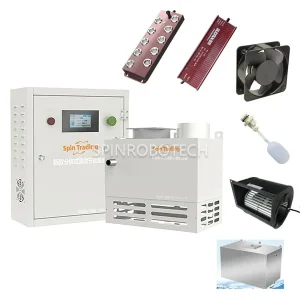
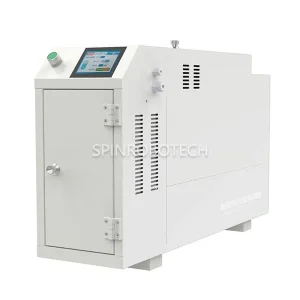
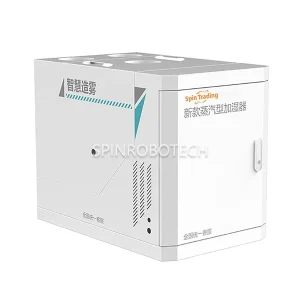

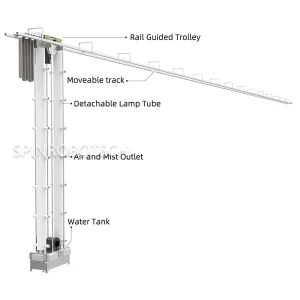
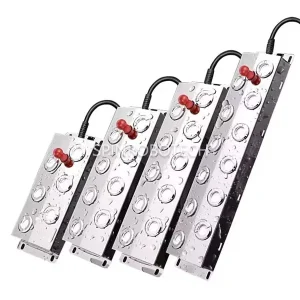


Ultrasonic misting system can create an extremely fine, controllable, and gentle high-humidity environment, which is key to extending the shelf life of fruits and vegetables.
Advantages of Ultrasonic Misting System
Extremely Fine Mist Particles, Uniform and Dead-Zone-Free Humidification:
Principe de fonctionnement: Ultrasonic misting system use high-frequency ultrasonic vibrators inside to directly “tear” water into fine mist particles with a diameter of 1-5 micrometers. This size is much smaller than the diameter of a human hair.
Avantages de la préservation:
Uniform Coating: Mist particles this fine can diffuse in the air like a gas, evenly coating the surface of every vegetable and fruit without forming large water droplets. This ensures highly consistent humidity in the preservation storage or display area, with no dry spots.
Direct Moisture Replenishment: The fine mist can effectively penetrate the micro-pores on the surface of fruits and vegetables, directly replenishing moisture lost due to transpiration with high efficiency.
Rapidly Increases and Stabilizes Humidity:
Efficient Humidification: Due to the high mist output and fine particle size, humidification is very rapid, quickly raising the ambient humidity from low levels to the target value (par ex., 90%-95% relative humidity required for fruit and vegetable preservation).
Contrôle précis de l'humidité: Modern ultrasonic humidifiers are typically integrated with smart humidity sensors/controllers. They monitor ambient humidity in real time and automatically start or stop, keeping humidity fluctuations within a very narrow range. This stable high-humidity environment maximally suppresses transpiration in fruits and vegetables, preventing wilting and shriveling.
Cool Mist Humidification, Preserving Original Quality of Produce:
Physical Atomization, No Quality Alteration: Ultrasonic humidification is a purely physical process that does not heat the water. It produces entirely cool mist.
Avantages de la préservation:
Retains Flavor and Nutrients: Avoids slight thermal stress that high temperatures might cause on the surface of fruits and vegetables, thereby better preserving their original fresh taste, flavor, and nutritional content.
Unaffected Appearance: Unlike steam humidification, which can cause temperature changes that may darken or soften the surface of delicate produce (such as leafy greens).
Energy-Efficient and Cost-Effective Operation:
Very Low Energy Consumption: As its core operation relies on electronic oscillation rather than heating or high-pressure pumps, ultrasonic humidifiers typically consume far less energy than high-pressure misting systems or electrode-style humidifiers. This significantly reduces electricity costs for preservation environments requiring 24/7 opération.
Integrated Smart Features for Unattended Operation:
Automated Operation: As mentioned, by connecting to a control system, it can achieve fully automated management. Administrators only need to set the target humidity, and the device operates independently, greatly reducing the need for manual intervention.
Expandable Functions: In advanced applications, ultrasonic humidifiers can be used in conjunction with ozone generators. By dissolving ozone in water for misting, they simultaneously humidify and utilize ozone’s strong oxidizing properties to sterilize the air and the surface of the produce, providing dual inhibition of microbial growth and enhanced anti-corrosion effects.
The Value of Ultrasonic Humidifiers is Particularly Prominent in the Following Scenarios:
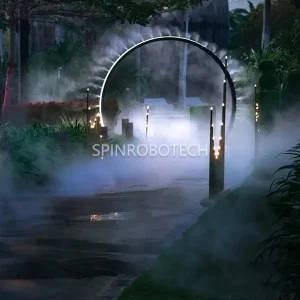
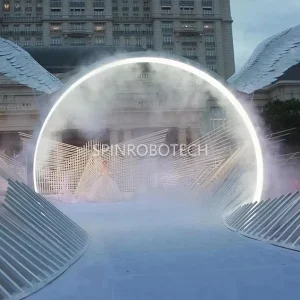
Supermarket Fresh Produce Sections / Premium Fruit and Vegetable Stores: The fine mist does not wet product labels or packaging and creates a visually appealing “misty” effect, significantly enhancing product appeal and stimulating purchases.
Small/Medium-Sized Preservation Cold Storage: Provides a precise storage environment for high-value produce extremely sensitive to water loss, such as strawberries, blueberries, leafy greens, and herbs.
Fruit and Vegetable Cold Chain Logistics: Used in transport compartments to maintain stable high humidity during transit, reducing loss.
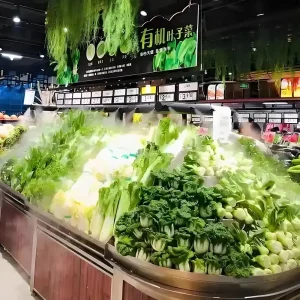

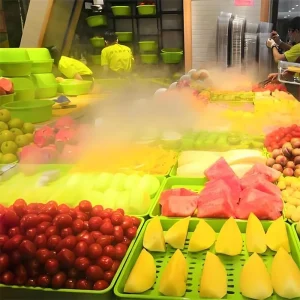
Le système de contrôle de l'humidité est une technologie de brouillard artificiel qui atomise l'eau en particules de la taille d'un micron à l'aide d'un équipement à haute pression., simuler l'effet du brouillard naturel. Avec une large application pour la buée, Refroidissement, Hydratant, Suppression de la poussière, Élimination statique, Répulsif contre les moustiques, Désinfection.
Et le système de contrôle de l'humidité a de nombreuses applications dans la culture des fleurs., culture de champignons, culture de semis de légumes, propagation par culture tissulaire:
Culture des fleurs: Pour les fleurs sensibles à l'humidité comme les orchidées, les humidificateurs centrifuges fournissent un environnement uniformément humide, couvrant environ 33 mètres carrés. Cela aide à maintenir le dynamisme des pétales et la richesse des feuilles.
Culture de champignons: Le disque de pulvérisation ionique enrichi en oxygène permet un contrôle de haute précision de l'humidité. Les producteurs rapportent que “depuis la stabilisation du taux d'humidité, le rendement et la qualité se sont améliorés.”
Culture de semis de légumes: L'humidification par ultrasons fournit une humidité uniforme pour les semis, réduire les maladies et les infestations de ravageurs tout en améliorant les taux de survie et la robustesse
Culture fruitière: Systèmes de brumisation à grande échelle (par ex., dans les vergers de kumquats) créer des microclimats optimaux, améliorer la qualité des fruits.
Propagation de cultures tissulaires: Dans des environnements stériles, L'atomisation d'eau ultra pure avec des systèmes de filtration garantit une culture de tissus réussie.