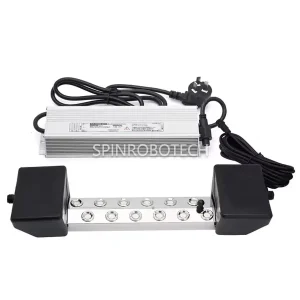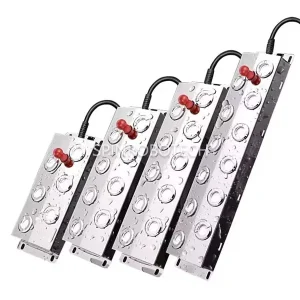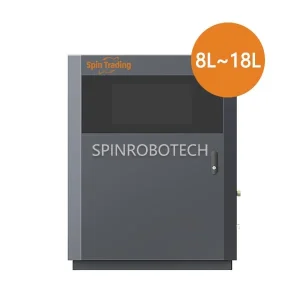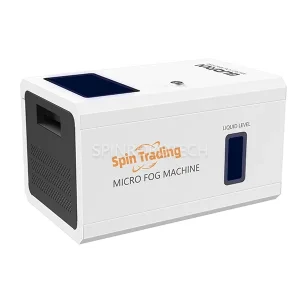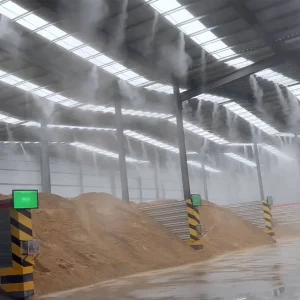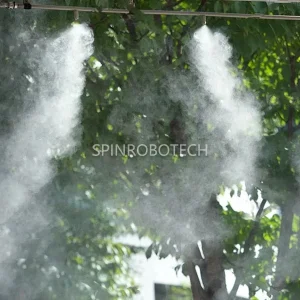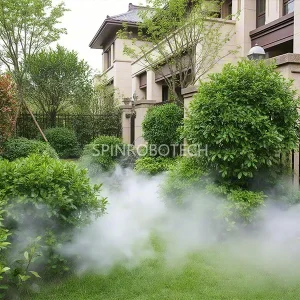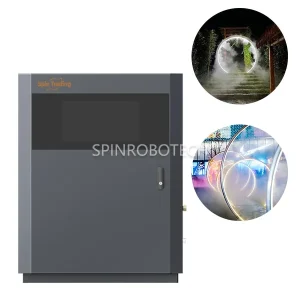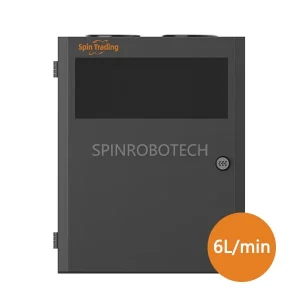


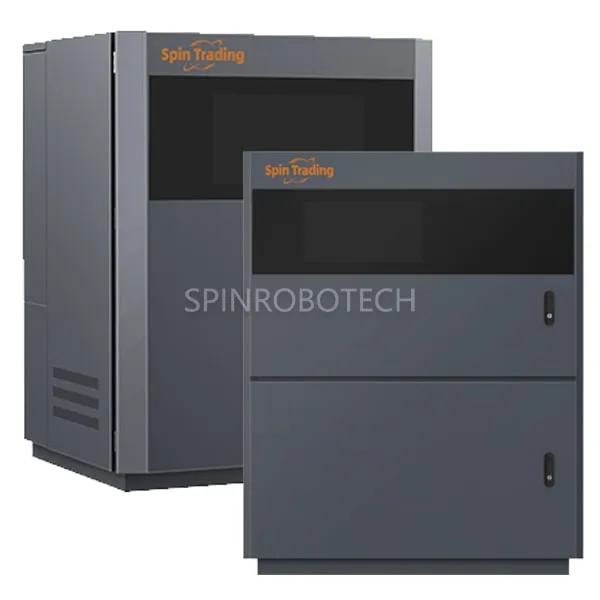


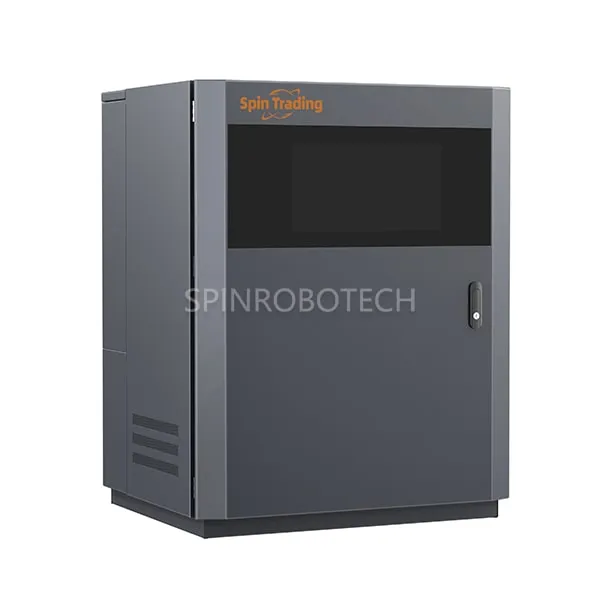

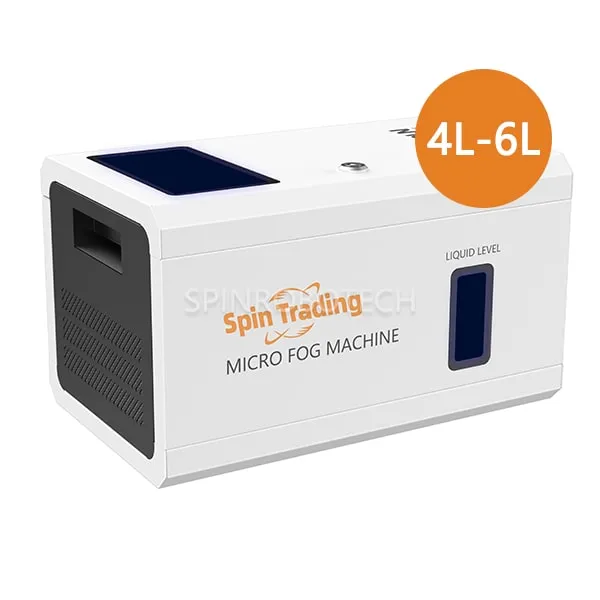
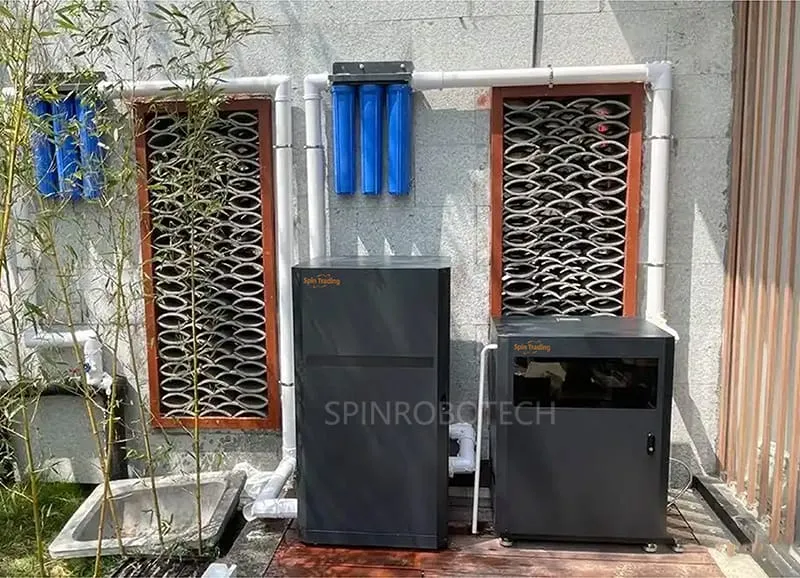
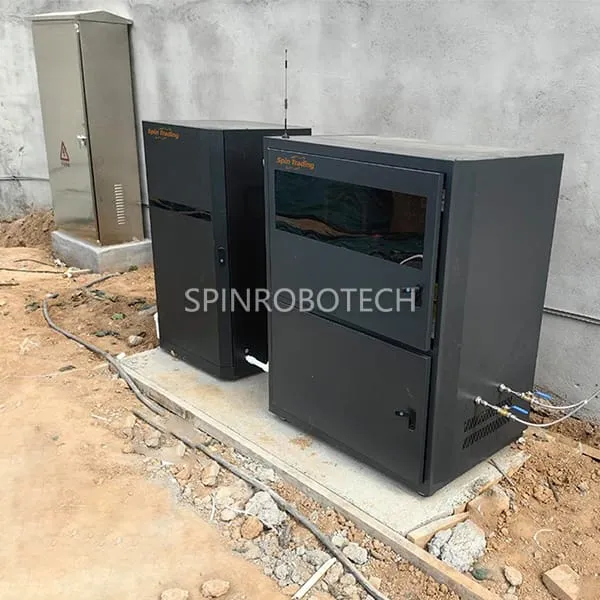



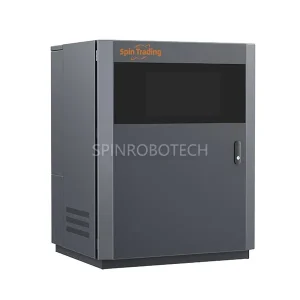
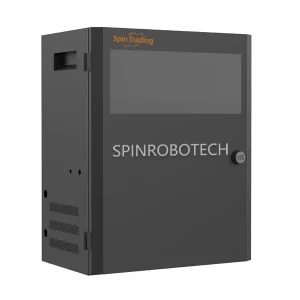

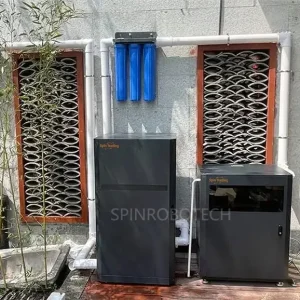
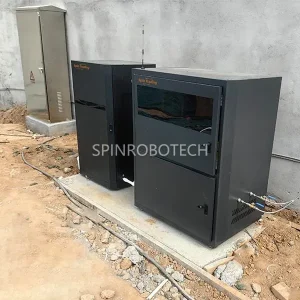
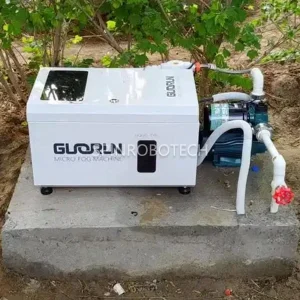


High-pressure atomizing humidifier follows a “brute force delivers results” approach, making it particularly suitable for more challenging and larger-scale preservation environments.
Advantages of High-pressure Atomizing Humidifier
-
Powerful Performance, Wide Coverage:
Working Principle: The core lies in the high-pressure plunger pump. It pressurizes ordinary tap water to several tens or even hundreds of atmospheres, then forces this high-pressure water through specially designed “jewel-grade” fine nozzles, instantly tearing the water into a fine mist of 5-15 microns.
Preservation Advantages:
Suitable for Large Spaces: This atomization method carries kinetic energy, allowing the mist to be projected over considerable distances. Therefore, it is highly suitable for vast areas like large cold storage rooms, warehouse-style supermarkets, and logistics distribution centers, enabling comprehensive, unobstructed humidification.
Highly Efficient and Rapid: Its powerful atomization capability and high-flow design allow it to quickly raise the humidity level in large spaces to the target range and respond promptly to humidity fluctuations caused by door openings or air exchange.
-
System Stability and Durability:
Robust Core Components: The high-pressure pump is the core of this technology, designed and built with industrial-grade, continuous operation in mind, offering long service life and high stability.
Preservation Advantages:
Suitable for 24/7 Continuous Operation:
For storage scenarios requiring long-term, uninterrupted preservation, the reliability of the high-pressure atomization system is crucial. It can withstand prolonged high-load operation, ensuring a consistently stable preservation environment.
Strong Environmental Adaptability: It is relatively more tolerant of water quality (although using softened water is still recommended), and the system itself is less prone to rapid scaling damage compared to ultrasonic methods (scale mainly accumulates in the nozzles, which are easy to clean and maintain).
-
Excellent Anti-Drip Design, Preventing Secondary Contamination:
Key Technology: High-pressure atomization systems are typically equipped with high-pressure solenoid valves and automatic pressure release devices. When turned off, the solenoid valve instantly cuts off the water flow, while the pressure release mechanism bleeds off the residual pressure in the nozzle, ensuring no water droplets fall from it.
Preservation Advantages:
Prevents Rotting of Fruits and Vegetables: This is a significant advantage over some other humidification methods. Direct water dripping onto the surface of produce or packaging can quickly cause localized rot and microbial growth. The “mist stops, water stops” characteristic of high-pressure atomization fundamentally avoids water accumulation caused by the equipment itself, greatly reducing the risk of decay.
-
Relatively Low Energy Consumption, High Atomization Efficiency:
Direct Energy Conversion: Its energy is primarily consumed by the high-pressure pump for atomizing water, rather than for heating (as in electrode/thermal humidification) or high-frequency oscillation. Therefore, for producing the same amount of humidification, its energy consumption is usually lower than that of steam humidification, and its comprehensive energy efficiency ratio might be more favorable compared to ultrasonic humidification in very large space applications.
-
Easy Integration and Centralized Control:
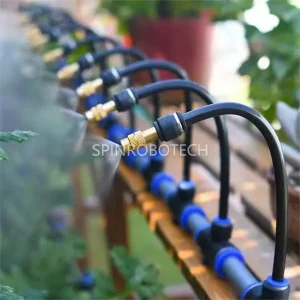
Systematic Deployment: One high-pressure main unit can connect to multiple nozzles via a pipeline network arranged at different locations, enabling centralized control and zoned management. This is very convenient for planning and control in large, complex cold storage structures.
Practical Application Scenarios
High-pressure atomizing humidifier are indispensable in the following scenarios:
Large Logistics Preservation Warehouses:
Providing long-term storage environments for bulk fruits like apples, pears, and citrus; the powerful atomization capability ensures humidity targets are met even in the depths of the warehouse.
Warehouse-style Membership Stores (e.g., Sam’s Club, Costco):
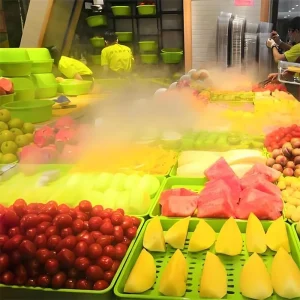
Providing broad and uniform humidity coverage for their tall shelving and open sales areas.
Post-Harvest Processing and Pre-treatment Workshops:
Quickly humidifying the environment on sorting and packaging lines to prevent product water loss before entering cold storage.
Refrigerated Transport Vehicles:
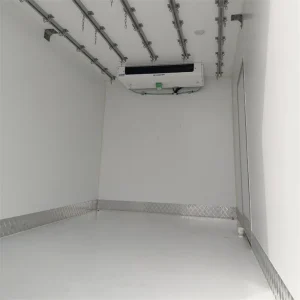
Installation inside compartments ensures high humidity is maintained during transit, especially suitable for long-distance transportation.

Considerations
Water Quality Management and Maintenance:
Although slightly more tolerant, we still recommend use softened or purified water. Using hard water will cause nozzle clogging, requiring regular cleaning or replacement, which increases maintenance costs. The system must be equipped with precision filters to prevent water impurities from wearing out the high-pressure pump and clogging the nozzles.
Nozzle Layout and Avoiding Direct Spray:
The positioning and angle of the nozzles are crucial. Ensure the mist fully disperses and evaporates in the air, and absolutely avoid direct, continuous spraying onto produce or packaging, as local over-wetting can still lead to rot.
Applicability in Winter or Low-Temperature Environments:
In low-temperature cold storage, special attention must be paid to pipeline freeze protection to prevent water pipes from freezing and bursting when the equipment is not running.
In summary, the high-pressure atomization humidifier is the “heavy-duty workhorse” in the field of fruit and vegetable preservation. With its powerful humidification capacity, extremely high system stability, and crucial anti-drip characteristics. It provides a reliable and efficient humidity solution for large-scale, industrial-grade produce preservation. It focuses not just on “adding humidity,” but on how to do so “safely and sustainably.”
Moisture Humidifiers in the Modern Fruit and Vegetable Cold Chain Preservation Industry
The humidity control system is an artificial mist technology that atomizes water into micron-sized particles using high-pressure equipment, simulating the effect of natural fog. With wide application for Fogging, Cooling, Moisturizing, Dust Suppression, Static Elimination, Mosquito Repellency, Sanitization.
And The humidity control system has wide applications in flower cultivation, mushroom farming, vegetable seeding cultivation, tissue culture propagation:
Flower Cultivation: For humidity-sensitive flowers like orchids, centrifugal humidifiers provide a uniformly moist environment, covering approximately 33 square meters. This helps maintain petal vibrancy and leaf lushness
Mushroom Farming: The oxygen-enriched ion spray disc enables high-precision humidity control. Growers report that “since stabilizing humidity levels, both yield and quality have improved.”
Vegetable Seedling Cultivation: Humidification delivers uniform humidity for seedlings, reducing disease and pest infestation while improving survival rates and robustness
Fruit Cultivation: Wide area misting systems (e.g., in kumquat orchards) create optimal microclimates, enhancing fruit quality.
Tissue Culture Propagation: In sterile environments, ultra-pure water atomization with filtration systems ensures successful tissue cultivation.