
The end-effector is the key component that determines whether a palletizing robot can work efficiently. Different packaging materials and scenarios require matching different types of grippers. Here is a detailed guide to the six main types of palletizing robot grippers:
( For detailed information on our three palletizing robot types, click here: Automated Palletizing Solutions: A Complete Guide to Cartesian, Column-Type, and Articulated Robots )
Mechanical Gripper
Applications: Palletizing of regular packaging in food, beverage, and consumer goods industries
Optimal Materials: Cartons, plastic containers, regular barrels, and other packaging that can withstand mechanical pressure


Vacuum Suction Gripper
Applications: High-speed palletizing of materials with flat surfaces
Optimal Materials: Laminated cartons, metal sheets, glass panels, plastic trays, and other smooth-surfaced items

Fork Gripper (Pallet Fork)
Applications: Pallet handling in warehousing, logistics, and for heavy goods
Optimal Materials: Standard wooden pallets, plastic pallets, and complete layers of goods

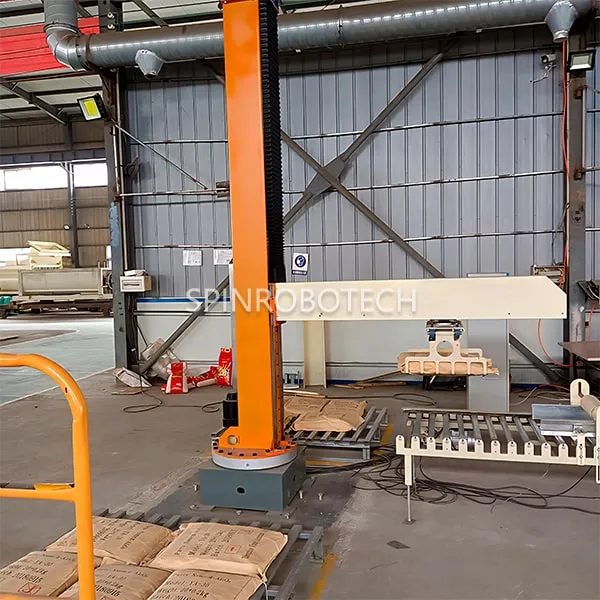
Magnetic Gripper
Applications: Steel metallurgy and metal processing industries
Optimal Materials: Steel coils, steel materials, metal sheets, and other magnetic materials

Flexible Gripper
Applications: Handling of fragile, irregularly shaped items
Optimal Materials: Fruits, baked goods, bottled products, precision components
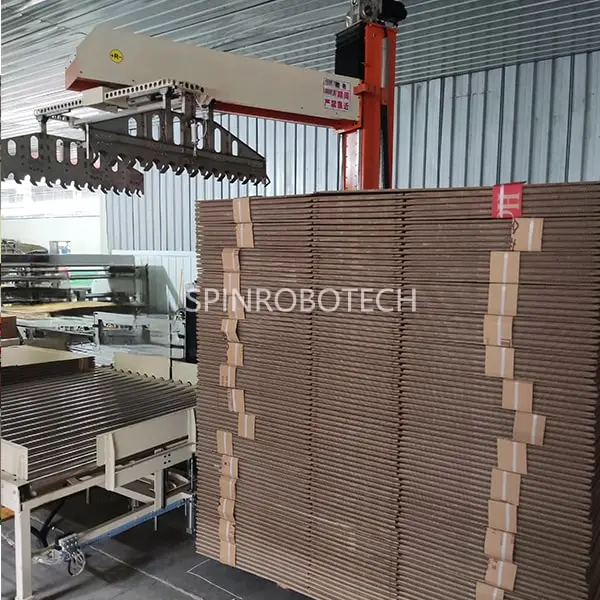
Customized Special Gripper
Applications: Specialized needs with unique shapes or specific process requirements
Typical Examples: Bag grippers, barrel grippers, multi-functional combination grippers

Key Selection Considerations
Material Characteristics: Shape, surface material, weight, fragility
Efficiency Requirements: Production cycle time determines gripper speed requirements
Working Environment: Temperature, humidity, cleanliness, and other conditions
Cost and Flexibility: Frequency of product variety changes and investment budget
Choosing the appropriate palletizing gripper requires comprehensive evaluation of material characteristics, production needs, and working environment. The correct selection can not only improve palletizing efficiency but also reduce product damage, maximizing return on investment.
Contact our solution experts today to get your customized industry automation assessment report!